Village of Hope and Campus Development
The past year has been a significant one for the development of Visionwest’s Glendale Campus, as the long-held vision of a Village of Hope — Kāinga o te Tūmanako — has continued to move from aspiration into visible, practical reality.
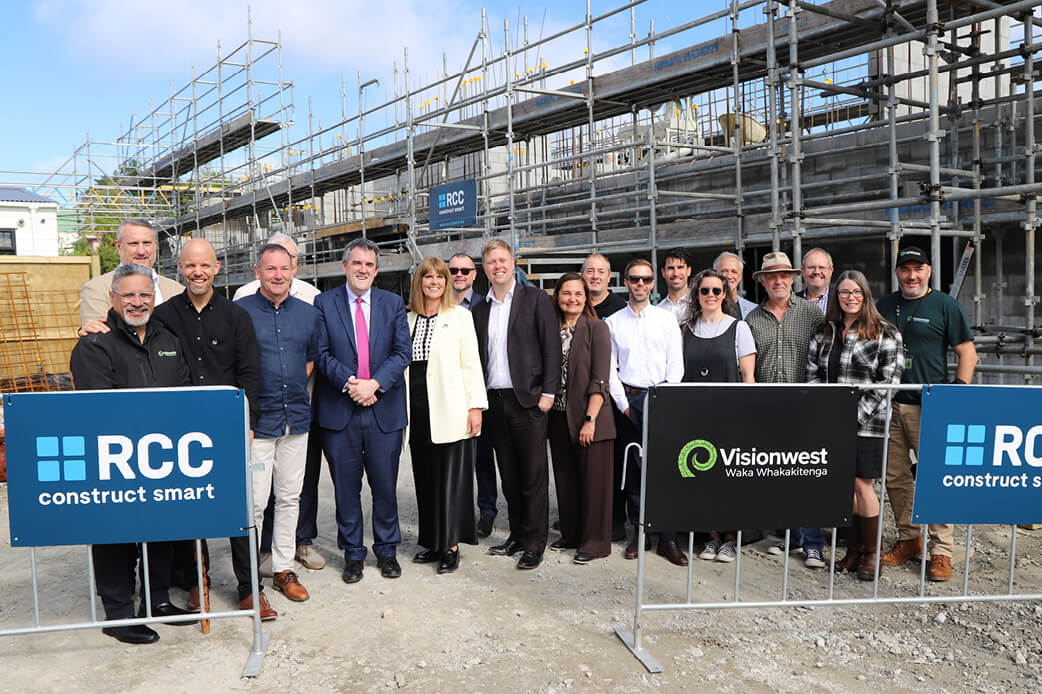
Glendale Apartments Celebration November 2025
Rather than being defined by a single building project, the Glendale Campus Development represents a wider reimagining of Visionwest’s tūrangawaewae in Glen Eden in partnership with Glen Eden Baptist Church. It will be a place where housing, whānau support, community care, church life, learning, and belonging can be woven together for generations to come. The vision is to create an integrated campus where people can live, access support, build relationships, and experience dignity, stability, and hope.
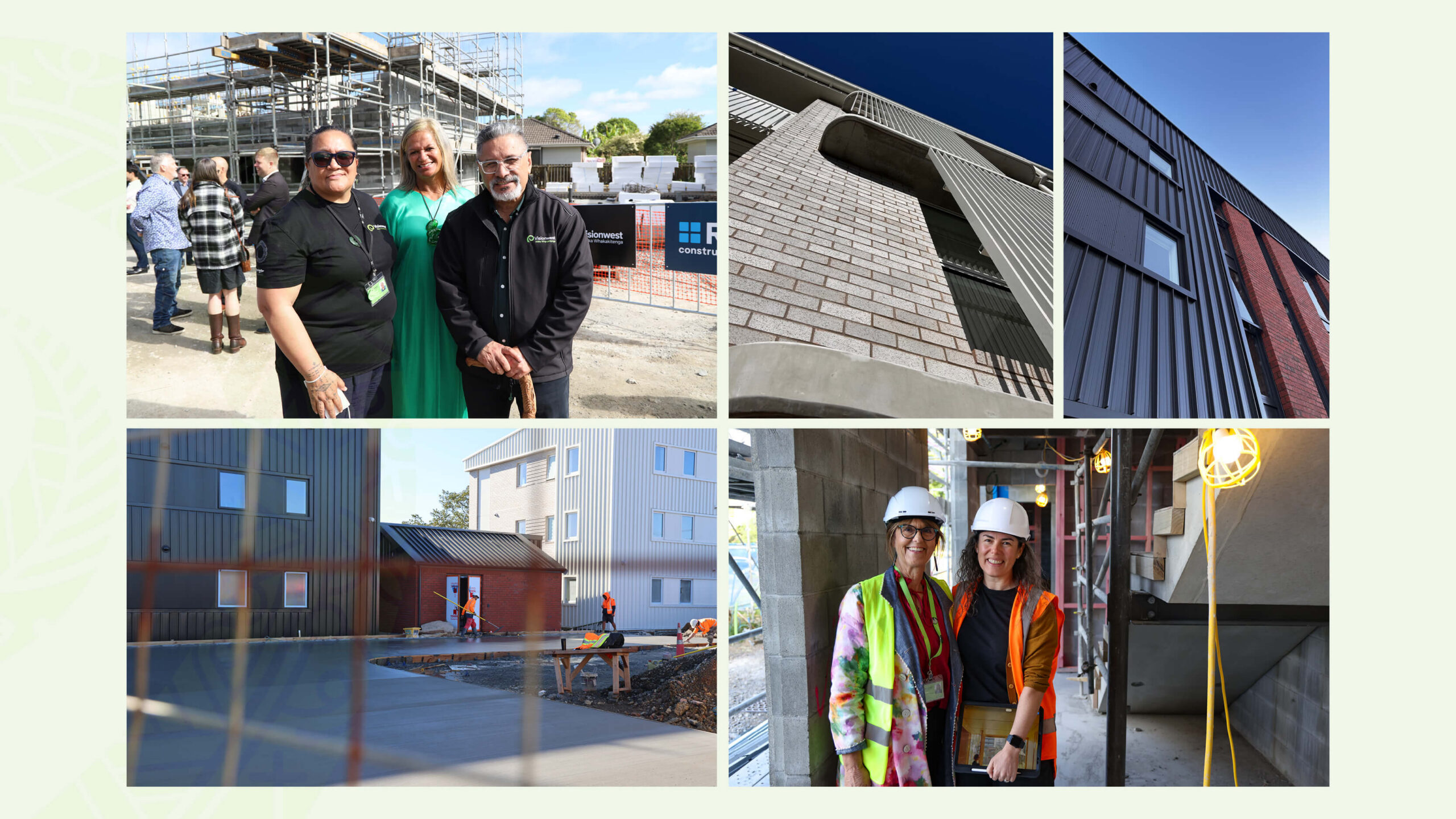
A major focus of the year has been Stage One of the development: the construction of 24 long-term community housing apartments at 91 Glendale Road. These apartments form the first major physical expression of Kāinga o te Tūmanako and are designed to provide safe, warm, supportive homes for whānau in housing need. The development includes a mix of one- and two-bedroom apartments, with accessible design features and a central community space to encourage connection between residents, neighbours, and Visionwest kaimahi.
Alongside planning and construction progress, important site preparation has taken place. Resource consent for Stage One was issued in March 2025, with conditions subsequently met and siteworks commencing. Clearing the site has required the removal of older buildings, including Building 8, which had previously housed Ōhinga Tū. The removal of 93B Glendale Road was also scheduled to enable the full Stage One site to be freed up for development. In early 2026, further work at 95 Glendale Road included relocating the cabin with the deck, removing remaining sheds and Building 13 — the old green building — and clearing concrete from the site. These practical works have been disruptive at times, but they are a necessary part of making space for the campus Visionwest is seeking to build.
There has also been progress on the wider campus vision. Planning has continued for Stage Two, the Community Hub, which is intended to become the heart of the village — a welcoming place where whānau can access wraparound support including housing services, financial mentoring, counselling, trauma-informed care, kai support, youth development, and other community services. Over the past year, the campus development team has led consultation workshops and conversations with Visionwest staff, whānau, Glen Eden Baptist Church, community members, and wider stakeholders. These insights have helped shape early concepts for the Hub and ensure the design reflects real community needs.
Stage Three, the Intergenerational Learning Centre, has also advanced through the completion of a co-design feasibility study. This work explored how early childhood learning, older adult housing, intergenerational connection, shared gardens, and community activities could come together in ways that are desirable, feasible, and grounded in whānau-centred design.
Through all the significant campus movements the development has required collective flexibility. Services and administration teams have shifted locations as older buildings are removed and future spaces are prepared, with some teams relocating to Koru Paihere (275 Glengarry Road) and others finding interim premises elsewhere.
The Glendale Campus Development is, at its heart, a long-term investment in people, place, and future generations. It is about replacing tired and fragmented facilities with purpose-built spaces that reflect aroha, manaakitanga, whanaungatanga, and mana. There is still a long way to go, but this year has shown clear and tangible progress. The foundations are being laid — physically, relationally, and strategically — for a campus that can serve West Auckland with hope for decades to come.