
Housing Services
Housing Services Director’s Overview
Over the past financial year, Visionwest Community Housing has grown in both reach and depth, responding to rising complex need while strengthening the supports that help whānau move from homelessness and instability into safer, more secure homes.
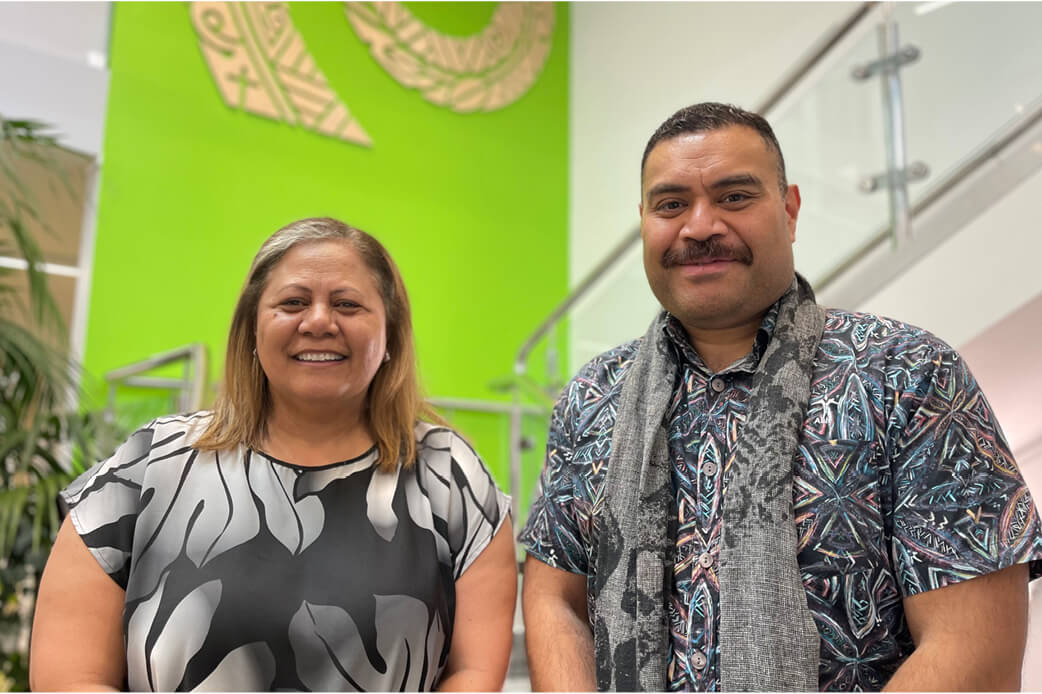
Judy Matai’a interviewed by John Pulu – Tagata Pasifika
One of the clearest signs of this growth has been the increase in permanent housing outcomes. Visionwest’s number of permanently housed whānau rose from 441 in the previous year to 662 in the 2025/26 financial year, reflecting our expanded homelessness outreach and additional Housing First Priority places. Tenancy sustainment remained strong at 83%, showing that as more whānau with layered and complicated needs are housed, Visionwest’s wraparound model continues to provide the relational, practical, and advocacy support needed for long-term stability.
Housing stock also grew significantly. Housing First leased properties increased from 334 to 499, while the total number of Visionwest-owned and managed homes grew from 636 to 879. This has been supported by new and extended contracts, the Government’s Housing booster fund, and stronger pathways from outreach, transitional housing, and rapid rehousing into permanent homes. The expansion has enabled more whānau to access warm, dry, affordable housing, while also increasing demand on tenancy and support teams as referrals involve more complex needs, including mental health challenges, addiction, family harm, disability, neurodiversity, financial hardship, and trauma.
A major development has been progress on the Glendale Apartments, Stage One of the wider Village of Hope – Kāinga o te Tūmanako campus vision. Resource consent for the 24 long-term apartments was issued in March 2025, conditions were met, and siteworks commenced. The project has required significant preparation, including clearing older buildings and relocating services, but it marks a tangible step toward a long-held vision for weaving together housing, intensive support, community connection, and belonging on Visionwest’s Glendale Road tūrangawaewae.
Visionwest also continued to contribute strongly to sector conversations. The Community Housing Aotearoa (CHA) conference provided an important platform to advocate for models that combine permanent homes with support “baked in, not bolted on,” and to reinforce the proven value of Housing First.
The Pasefika Housing Conference held in Samoa was another significant moment, enabling Visionwest to participate in wider Pacific housing conversations, learn from regional experience, and strengthen relationships around culturally significant responses to housing need.
It was a space to explore collective, community-based, and Pasefika centred housing solutions.”
Across Housing Services, Visionwest has continued embedding kaupapa Māori. With a high proportion of Housing whānau identifying as Māori, culturally safe, tikanga-based approaches are central to how services uphold mana, protect whānau autonomy, and build trust. During the year, Housing advanced its Māori Capability Strategy through a dedicated rōpū focused on governance and partnerships, workforce development, practice frameworks, and community outcomes, making kaupapa Māori a core part of housing identity and decision-making.
The year has not been without pressure. We’ve seen reduced Emergency Housing availability, increased homelessness, and a shortage of suitable homes for disabled whānau, larger whānau, youth, older people, and those with complex needs. Yet the overarching story is one of practical growth, strengthened practice, and continued advocacy.
Visionwest Community Housing has helped more whānau into permanent homes, expanded its housing platform, progressed a landmark campus development, and deepened its commitment to housing that restores dignity, strengthens belonging, and supports whānau to flourish. My immense thanks to the Housing staff, who without their tenacity and passion, we would not have been able to respond to the difficulties unfolding for many of our vulnerable whānau.
Judy Matai’a
Housing Services Director

HOUSEHOLDS IN PERMANENT HOUSING

HOUSEHOLDS WHO RECEIVE SUSTAINING TENANCY SUPPORT
Pehitahi’s Story
“My life before Visionwest was, I was homeless.” Pehitahi had come through domestic violence, trauma, and years of carrying things alone.
At her lowest point, she and her son were sleeping in her car.