
Whānau Services
Whānau Services Director Overview
Over the past year, Whānau Services continued as a place of welcome, connection and practical support for whānau. We saw both growing pressure and deepening response to the many challenges that whānau in our community face including rising living costs, food insecurity, financial stress, housing instability and complex wellbeing needs.
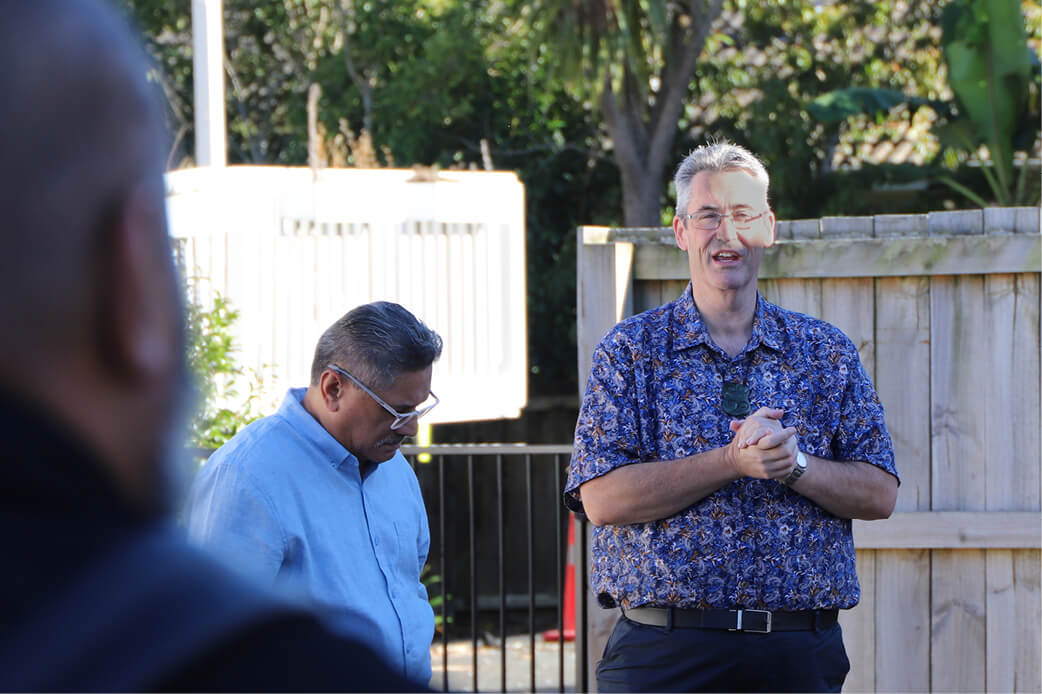
Rāwiri speaks at the Building 8 Karakia - future site of apartments
There was an important change made to our kai support systems to further live into the whānau-centred approach we prioritise. As part of this, a new food-support booking system was established to enable kaimahi to better understand the heart and hopes of each whānau, rather than simply responding to an immediate food need. These changes have strengthened our navigation responses and opened pathways to Money Mentors and other supports, ensuring whānau are met with aroha, listened to well, and connected with the right support at the right time. Kai support increased to 5,511 households, while Financial Mentoring also grew, reaching 588 whānau. Behind those numbers is an important shift in how people first connect with Visionwest.
The Whānau Centre continued to provide a vital front door into wraparound care, with more intensive engagement accessed by 460 whānau. This steady increase reflects the importance of trusted relationships and good navigation in helping people find practical pathways forward.
Eden Cottage provided an early learning option for 47 tamariki and welcomed in a new Early Childhood Education Service Lead, Phillip Ozanne, to help us navigate this important work into the future. Mātanga Oranga and the Wellbeing Centre sustained consistent delivery of trauma-informed care and counselling, supporting 227 and 519 people respectively. Together, these services show the breadth of Whānau Services’ contribution, from early childhood and emotional wellbeing through to kaupapa Māori trauma-informed support and everyday practical care. A new Clinical Services Lead Marama Hetaraka joined us to help support the continued development of these important specialist services.
Youth development remained an area of significant impact. Through Ōhinga Tū, Visionwest supported 358 rangatahi during the year. Within this, more intensive employment coaching pathways, including
He Poutama Rangatahi and Community Job Coaching, supported 104 rangatahi, a small increase on the previous year. This points to a continued focus on providing sustained, tailored support for young people as they work toward education, training, employment and greater confidence in their future direction.
A further highlight was the growing strength of kaupapa Māori capability across Whānau Services. Teams continued to prioritise tikanga-informed, whānau-centred practice, recognising that effective support begins with upholding mana, listening well, and walking alongside whānau in ways that reflect their realities, strengths and aspirations. This mahi continues to shape the way services are delivered, from first contact through to ongoing support.
This year was marked by the service highlights above, important internal developments, and the strengthening of leadership across Whānau Services. These have helped us provide consistent practice, safer pathways for whānau, and clearer connection and care.
Rāwiri Auty
Whānau Services Director

HOUSEHOLDS RECEIVING FOOD SUPPORT

NUMBER OF HOUSEHOLDS RECEIVING FINANCIAL MENTORING

RANGATAHI ENGAGED IN INTENSIVE EMPLOYMENT COACHING PATHWAYS
Rachel’s Story
For Rachel, life had become overwhelming. She was trying to navigate a tenancy situation she had never faced before, while also carrying the pressure of finding somewhere to live and still paying rent elsewhere.