
Tauihu Report
Shaping the future through faith, justice and hope
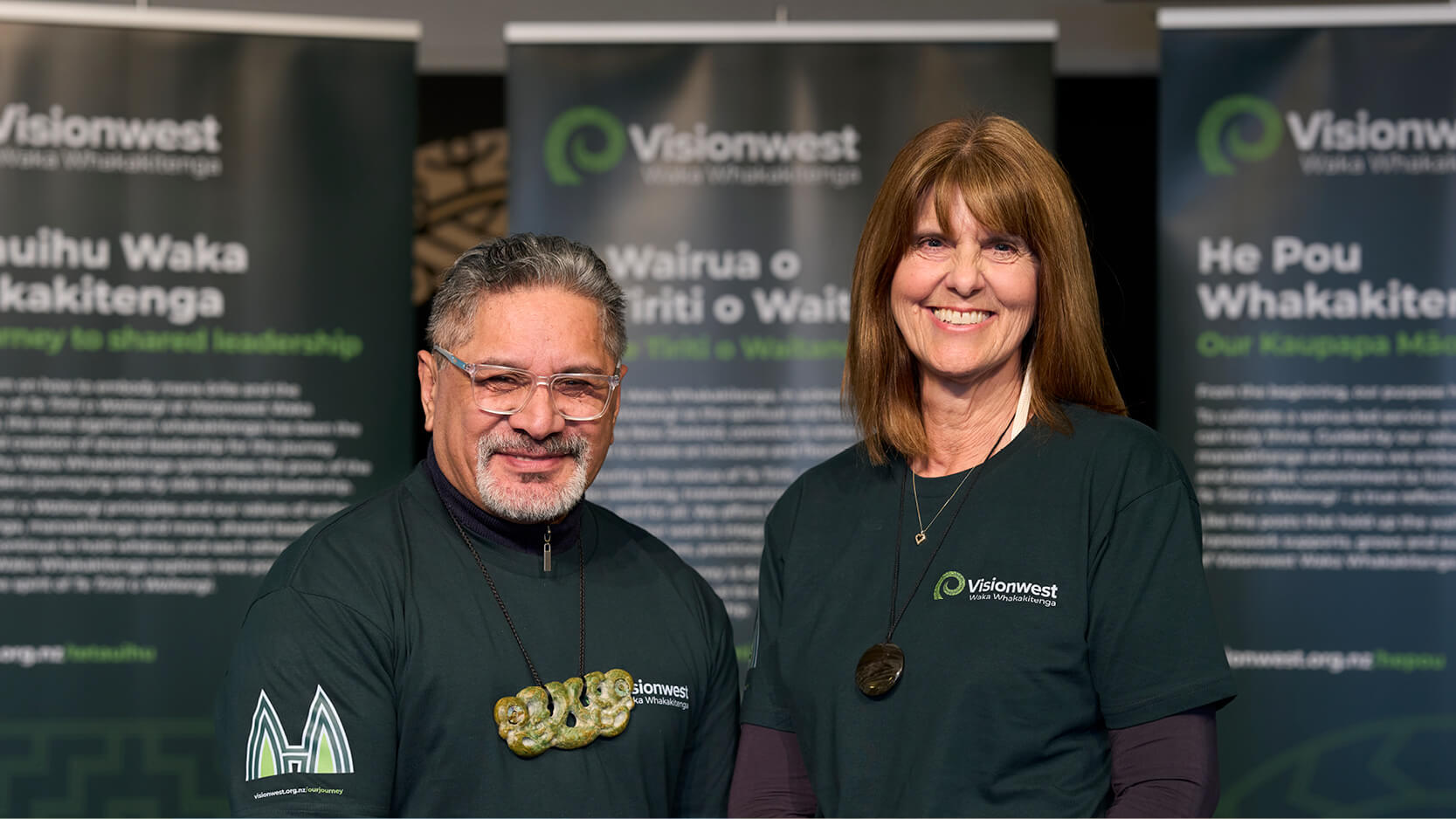
Our last financial year has caused us to reflect deeply on a question that feels increasingly important: what kind of organisation does Aotearoa New Zealand need Visionwest to become in the decades ahead?
Around us, whānau and communities continue to experience housing insecurity, rising living costs, persistent inequality, disconnection and growing complexity. These challenges are often discussed in terms of systems, policies and services, but their impact is ultimately felt by people seeking hope, belonging, and opportunity. Visionwest journeys with whānau to see that hope and belonging is realised in full. And while the needs are great, so too are the stories of transformation that continue to emerge throughout our organisation. Many of which you can read in this report.
However, our role cannot be limited to responding to immediate need alone. It must also be to help shape a future in which whānau can flourish. This year has therefore been marked not only by service delivery and organisational achievement, but by important conversations about our identity, purpose and the legacy we hope to leave for future generations.
Leading Beyond the Present
One of the greatest challenges facing for-purpose organisations is the tension between urgent need and long-term transformation. The demands of today are significant and immediate. Yet if all our energy is consumed by crisis, we risk neglecting the deeper work of changing the conditions that create and sustain it.
Over the past year, Visionwest has intentionally lifted its eyes to the longer horizon. Through the development of our new strategic plan and the work we have called the Hundred-Year Plan, we have asked not only what Visionwest should do next, but what contribution we are called to make over generations.
Our strategy concentrates action in the next five years while holding a century-long vision of renewal, restoration, and intergenerational wellbeing. It is grounded in a simple but profound identity: faith-led, Te Tiriti-centred and whānau-focused. These commitments shape how we understand leadership, partnership, investment, service, and justice.
The new strategic plan affirms several key commitments that will shape Visionwest’s next season of work between 2026 and 2031:
- Strengthening our faith-led identity.
- Embedding Te Tiriti-centred practice.
- Growing transformative housing solutions.
- Expanding holistic health and wellbeing supports.
- Deepening strategic partnerships.
- Stewarding resources for future generations.
Shared Leadership and Te Tiriti
Importantly, our Tauihu shared leadership journey continues to mature. For us, shared leadership is not simply a structural arrangement. It reflects a commitment to partnership, collective wisdom, and decision-making that is strengthened by different perspectives and lived experience.
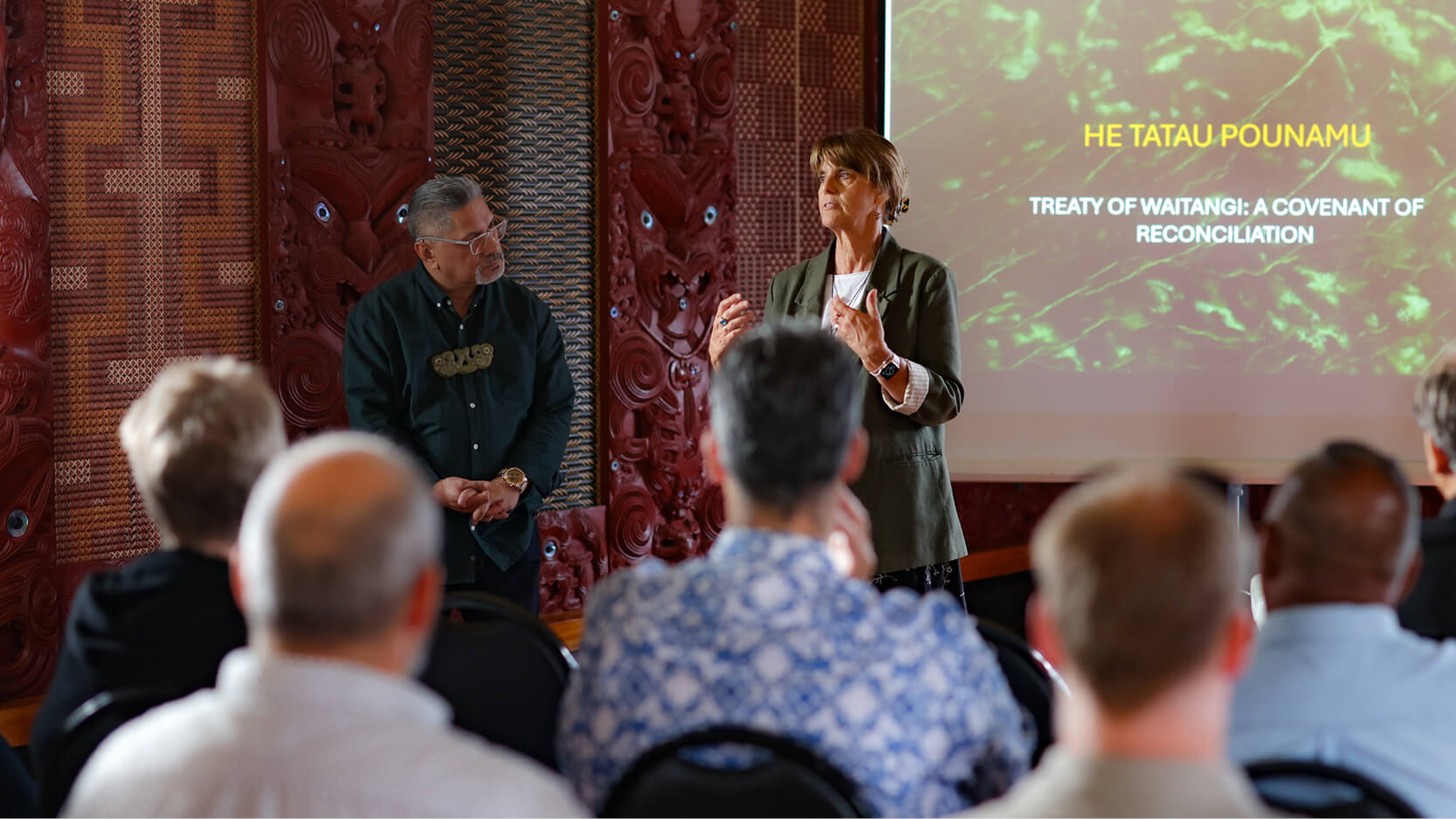
Te Tiriti o Waitangi calls us beyond symbolic acknowledgement and towards relationships shaped by trust, equity, accountability and shared leadership. We are still learning what this requires of us, but we believe this journey is essential if Visionwest is to contribute authentically to healing, reconciliation and restoration in Aotearoa.
Growing as a Faith-led Justice Organisation
Perhaps the most significant conversation within Visionwest over the past year has centred on our growing articulation of what it means to be a faith-led
justice organisation.
For many years, Christian faith has underpinned our work. It has inspired the creation of services, shaped our response to poverty and inequality, and motivated generations of staff, volunteers, and supporters. Increasingly, however, we have recognised the need to make the connection between faith and justice clearer and more intentional.
Justice is more than a policy question. It is deeply human and spiritual. It is about dignity, restoration, belonging, equity, and hope. It asks what kind of society we are creating, whose voices are heard, and whether our systems enable people and whānau to flourish.
The Justice Sessions facilitated by Charles Hewlett, have become an important expression of this journey. Through biblical theology, reflection, dialogue and engagement with the realities of poverty, inequality and Te Tiriti, kaimahi have had the opportunity to explore how faith can shape leadership, advocacy, service delivery and everyday practice. Faith-led justice is an invitation to deepen our understanding of why service matters, and to hold compassion and conviction together in the work that we do.
Continuing, Deepening and Growing our Baptist Relationships
Our identify as a Baptist-aligned organisation continues. We remain deeply grateful for and committed to our foundational, steadfast and integral relationship with Glen Eden Baptist Church.
Nationally, we have continued to be alert to and seek opportunity to co-locate with Baptist churches. In addition to our Ōtautahi office at Oxford Terrace Baptist Church, this year we celebrated the official opening of our Rotorua / Taupō offices for Home Healthcare on the site of Rotorua Baptist Church with a lovely mihi whakatau, attended by a range of local partner organisations there.
Throughout this financial year, important groundwork was laid for another major development for our organisation and our Baptist whakapapa, culminating in the July 1st transition of Iosis into the Visionwest whānau. The Iosis team not only bring a range of skilled community services, but also a heart for faith, whānau and Te Tiriti o Waitangi that has made this process all the more meaningful and fitting as their rich history of holistic care continues as part of Visionwest.
Whānau Ora and the Future of Community Development
Our Whānau Ora journey has also gathered momentum. With a 12-month pilot about to commence, it reflects years of relationship-building, culturally grounded practice and learning alongside Māori and Pasefika leaders, whānau and communities.
Whānau Ora challenges traditional service models that organise support around contracts or institutional boundaries. It begins instead with the aspirations, strengths, and rangatiratanga of whānau. It recognises that housing, health, culture, wairua, relationships, identity and opportunity belong to one interconnected story.
These principles have been a key part of Visionwest’s provision of holistic wraparound support services. Whānau Ora principles remind us that sustainable transformation is not something done for whānau, but something built with whānau and led by whānau. We are excited about where our Whānau Ora journey can take us.
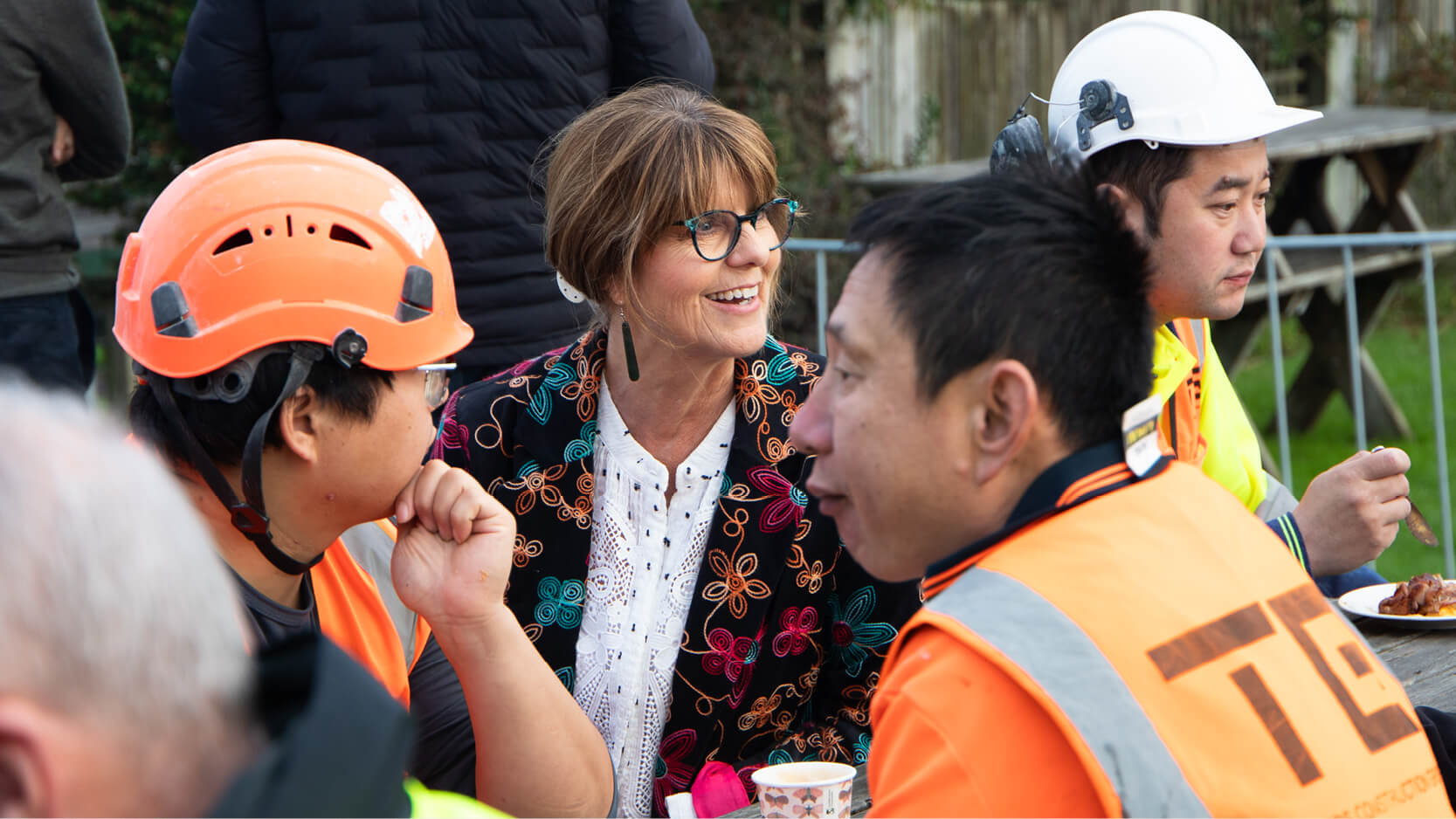
Rāwiri speaks at the Building 8 Karakia - future site of apartments
Social Investment with Humanity at its Centre
Our engagement with the Social Investment Agency has created another opportunity to explore how evidence, investment, and innovation can support better outcomes. Having been successful with stage two of SIA’s funding rounds, we are about to embark on a new journey for our Mātanga Oranga service that will see wairua driven responses to trauma taken to a scale rarely seen in Aotearoa.
Social investment is often discussed primarily through data and measurement. These matter, but they must remain connected to people, culture and lived experience. Data can help identify patterns and test impact, but it cannot replace relationships, trust or local wisdom. Our aspiration is to bring these elements together: wairua-oriented practice, robust evidence, kaupapa Māori principles, community expertise and the voice of whānau. Our journey ahead with SIA will do just that.
The Village of Hope: Building the Future in Place
The Village of Hope, Te Kāinga o te Tūmanako, is one of the clearest physical expressions of this long-term vision. It brings together housing, wraparound support, community connection, faith and intergenerational belonging on our Glendale Road tūrangawaewae.
The opening of 24 new community housing apartments is now imminent. These homes include one and two-bedroom apartments, accessible homes, and shared community space. Their significance goes beyond the completion of a building. Each home represents stability, dignity and the opportunity for whānau to put down roots within a community where support and connection are close at hand.
At the same time, substantial groundwork has been undertaken for the next stage: a purpose-built Community Hub at the heart of the Village. The design work has been shaped by whānau and kaimahi voice and by Te Ao Māori and Pasefika values. Its purpose is to make support easier to navigate and more connected, bringing whānau-facing services, community spaces and emergency-response capability together in one welcoming place.
This has been a foundation-building year for the Hub. The vision has been clarified, feasibility tested, preliminary design advanced, and the investment case strengthened. The platform for a major capital campaign is now in place.
The work ahead will require courageous partnership across government, philanthropy, business, Glen Eden Baptist Church and the wider community.
We believe the Hub is not simply a building project; it is enabling infrastructure for a more relational, integrated and community-led response to need.
Rāwiri speaks at the Building 8 Karakia - future site of apartments
Project 500 Homes
Housing remains one of the defining social challenges of our generation. It affects health, education, employment, connection, and the capacity of whānau to plan for the future.
Project 500 Homes reflects our conviction that Aotearoa needs practical, scalable, and long-term responses. Our ambition is not simply to increase the number of homes. It is to strengthen belonging and stability through fit-for-purpose housing and support that is built in, not bolted on. A home provides the foundation from which many other positive outcomes can grow. The last year has seen a more than doubling of our housing stock to take our owned properties to a volume of more than 200. While the additionality of new homes is critical for the communities and whānau we serve, what is equally important is the wrap-around support that ensures that whānau can thrive in the homes they dwell in. Much has been achieved, and there is much more to come.
Looking Ahead
The future will require for-purpose organisations to think beyond individual contracts and short-term interventions. It will require organisations willing to collaborate, honour Te Tiriti, invest for the long term and speak with courage about the systems that hold inequity in place.
We do not underestimate the scale of the challenges ahead. Yet we remain hopeful, because we continue to see extraordinary resilience in whānau, deep commitment from kaimahi and generosity from partners, funders, churches, donors and volunteers.
As Tauihu, we are grateful for the privilege of helping guide this waka. We move forward grounded in faith, guided by Te Tiriti, focused on whānau and committed to justice.
Together, we are not simply responding to today’s challenges. Together, we are helping shape the future.